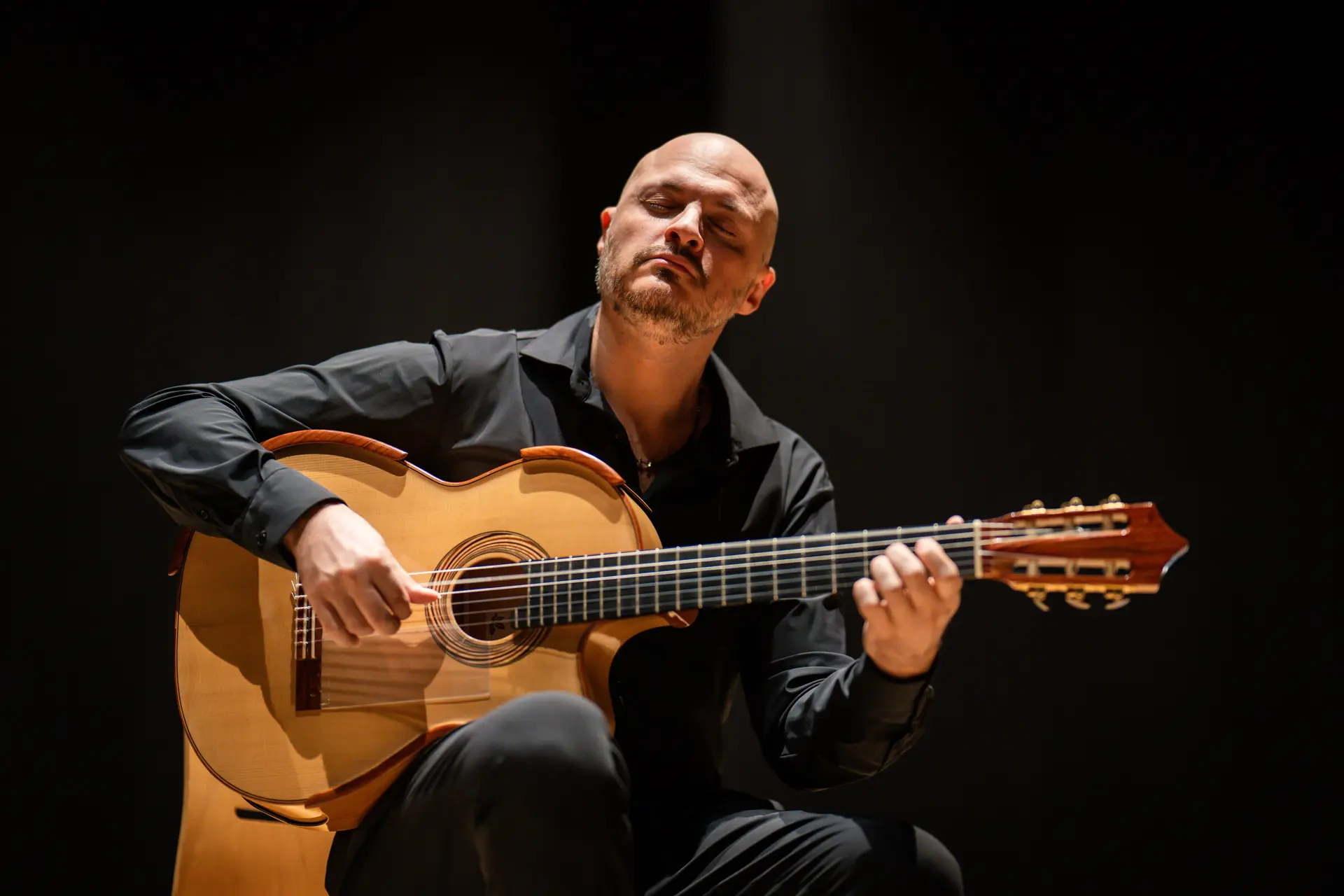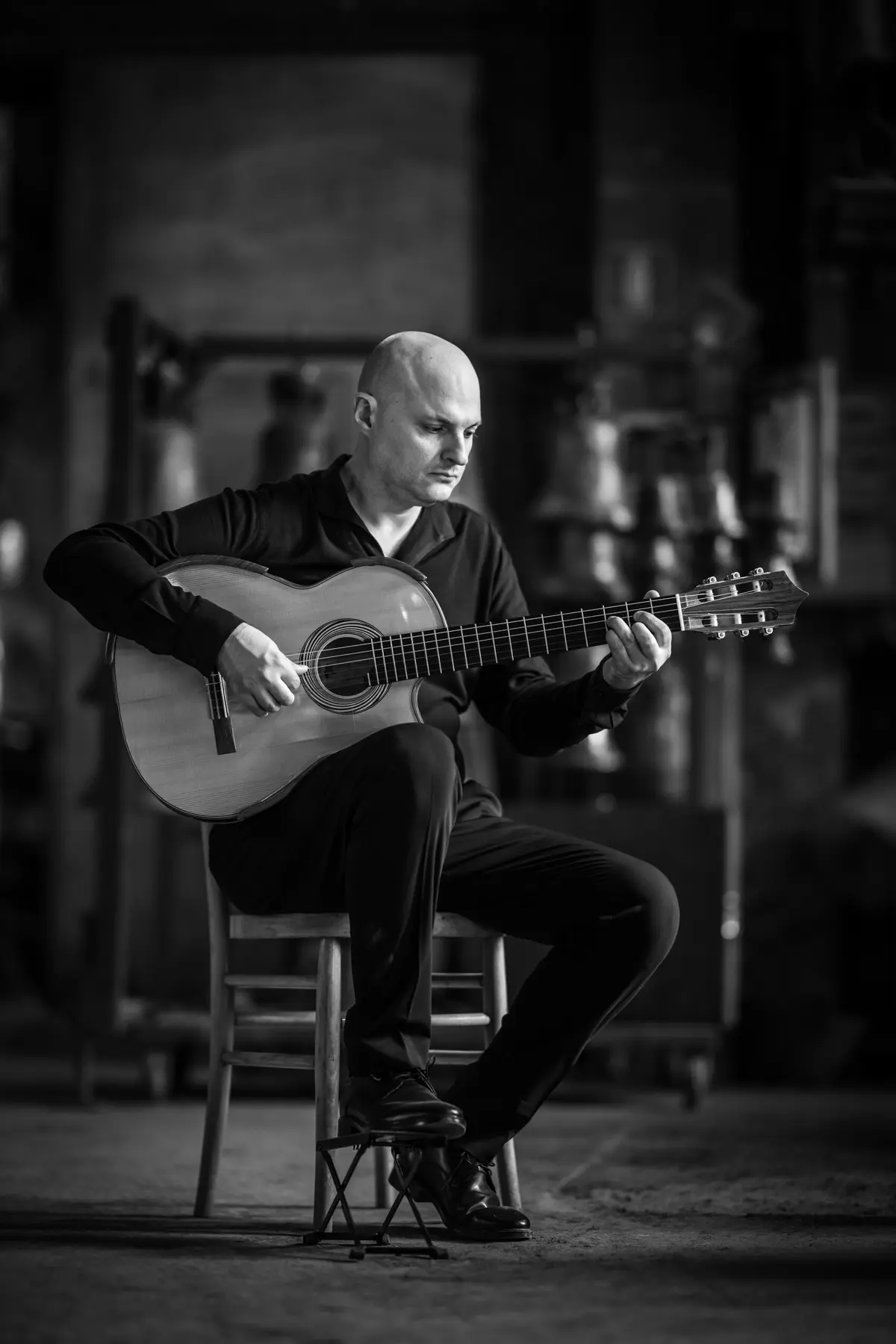
The classical guitar deserves a comeback.
I · First movement
I believe guitarists killed the guitar: they loved it the wrong way, shut it inside a self-referential system, cut it off from its audience, from its repertoire, from its potential.
In 2003 I won the 36th “Michele Pittaluga” International Competition in Alessandria: 40 concerts in Italy, Spain, Austria, Russia and the United States.
I was on the other side of the barricade.
I made my debut at the festivals celebrated in the specialist magazines. Some of them important: the Hermitage Theatre in Saint Petersburg, the Barcelona Guitar Festival, alongside Paco de Lucía, Pat Metheny, John Williams.
The rest, however, confirmed what my Maestro, Pasqualino Garzia, used to say: “little parishes”, respectable seasons where I even played to an audience of 10.
It was a problem with the system.
II · Second movement
From the outside, the magazines praised high-sounding festivals, new “world-famous guitarists”, “New Schools”.
From the inside, though, I was discovering a different story: self-promotion dressed up as information.
The classical guitar was beginning to lose credibility.
With Segovia its sound had “broken through” to audiences all over the world; after him, the stages, the audiences and the expectations grew ever smaller.
Alirio Díaz, Julian Bream, John Williams: the last heroes.
Then, the decline.
Today the classical guitar is kept locked in a museum by a circle of specialists.
III · Third movement
But is this really the fate of my instrument? I don’t believe it, because the guitar, by tradition, is an extraordinary instrument.
I claim its history, its beauty, its versatility, its repertoire and the Spanish Guitar School I inherited from Garzia: the only one that starts from Aguado and, through Tárrega, Llobet, Pujol and Segovia, reaches us today.
From this vision the CCCC was born: the Complete Classical Guitar Course, live-streamed.
An organic path built on 3 pillars:
- Studies: technique in the service of art
- Repertoire: rediscovering the original music
- Technique: the solidity, independence and stamina the music demands
At Umbria Jazz, 6,000 people applauded a Granaína by Antonio Rey, hearing something that had moved them.
If the flamenco guitar can do it, why shouldn’t the classical guitar? It only needs to be freed from the walls that imprison it: to leave the ghetto, return to the big stage, speak to those who don’t know it.
That is why I have built an alternative: I believe in the guitar, in its beauty, its history, its future. I believe it is simply waiting to be heard by its widest audience.
The classical guitar is not dead. Its comeback has just begun.
— Flavio Sala
14 October 2026